
Manually rebuilding a structure chart from a PDF, piecing together historical ownership from scattered entity records, wanting native AI features to assist with entity work and not having them, these are the pain points that are most familiar to just about anyone managing entities.
“We’re the place where it all starts, and finding documents when people need them is the biggest bottleneck,” Jill Hyde, Deputy General Counsel and Managing Director at Beacon Capital Partners, noted on a recent webinar, describing what it’s like for a lean legal team to be the sole keeper of a company’s organizational documents.
Three new AI-powered features in Atlas cut out the manual work of building and importing structure charts, and an update to entity and chart history makes it easier to see how ownership and structures have changed over time.
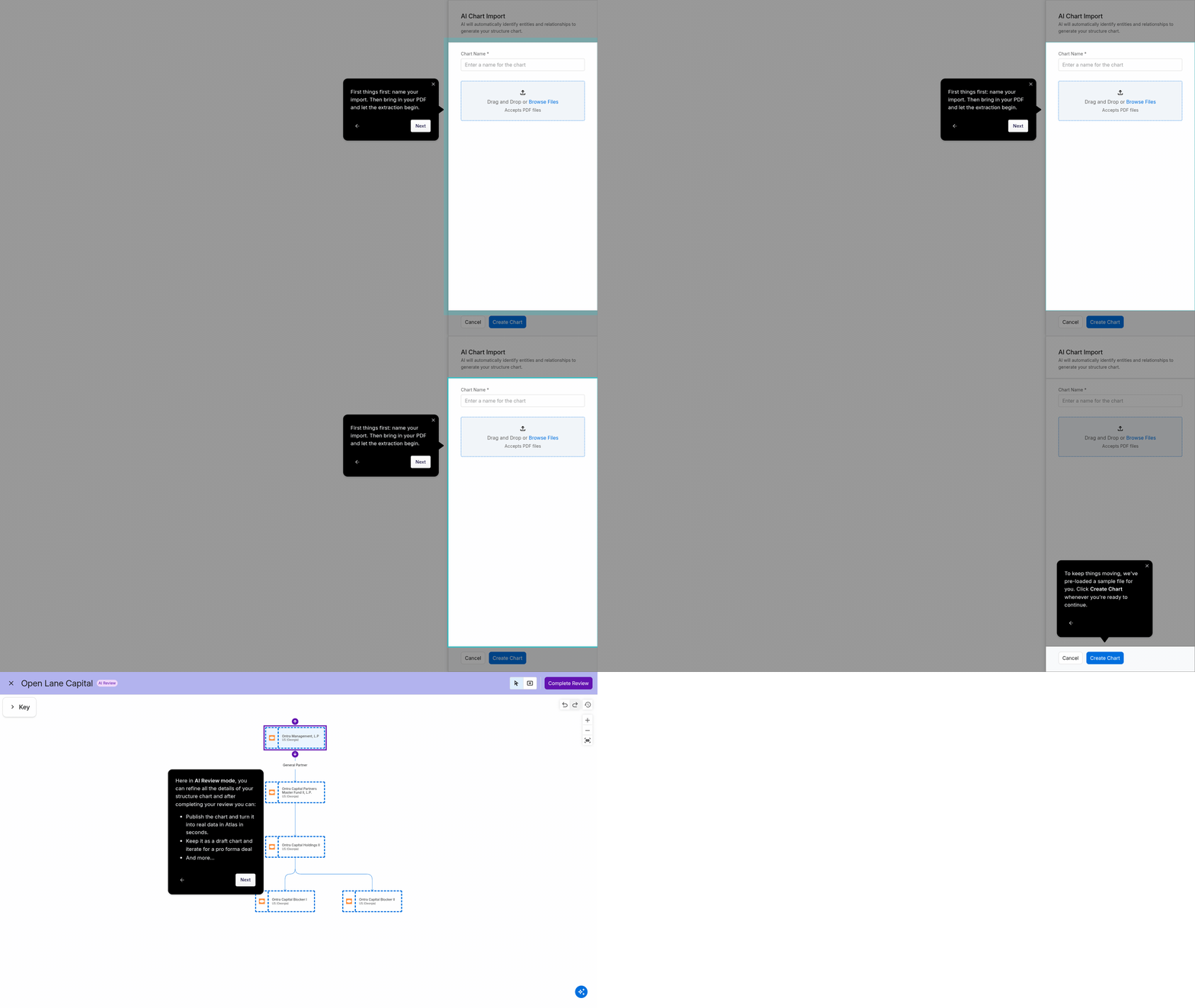
AI Chart Import: turn a PDF structure chart into a working Atlas chart
Import a structure chart directly from a PDF. Atlas reads the chart and pulls the underlying entity, ownership, and relationship data directly, so instead of rebuilding a chart from scratch, you get a working starting point. Use AI Chart Import to create new entities, or as the base for pro forma modeling.
That’s also why the review step matters. As Ontra product manager Adrienne Williams put it on the same webinar, “if the ownership data is stale or the jurisdictions are mistaken, AI will still work; it just executes confidently on bad information, which is worse than a human doing it in the first place.” AI Chart Import is built around that reality: after the AI reads your PDF, you’re the human in the loop reviewing every entity and relationship it found before anything is finalized.
AI Chart Generation: describe a structure, watch Atlas build it
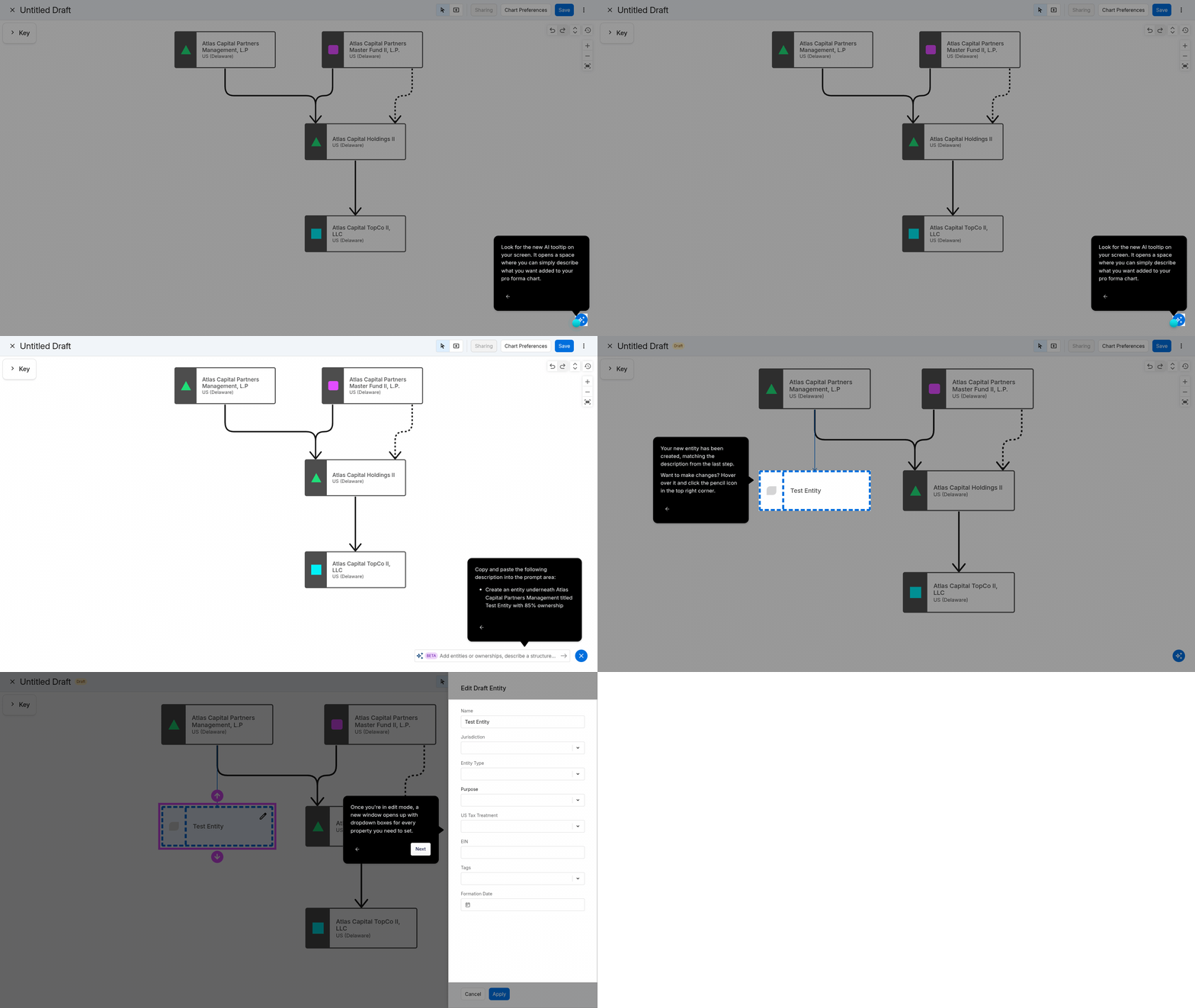
AI Chart Generation allows you to describe a structure in plain language, and Atlas builds the chart in real time. It’s a fast way to sketch out a new structure or model a change without laying out every entity and connection by hand.
Pair it with AI Chart Import for end-to-end coverage: import an existing structure from a PDF, then describe the changes you want to model next to it.
AI Search: ask Atlas a question instead of digging through records
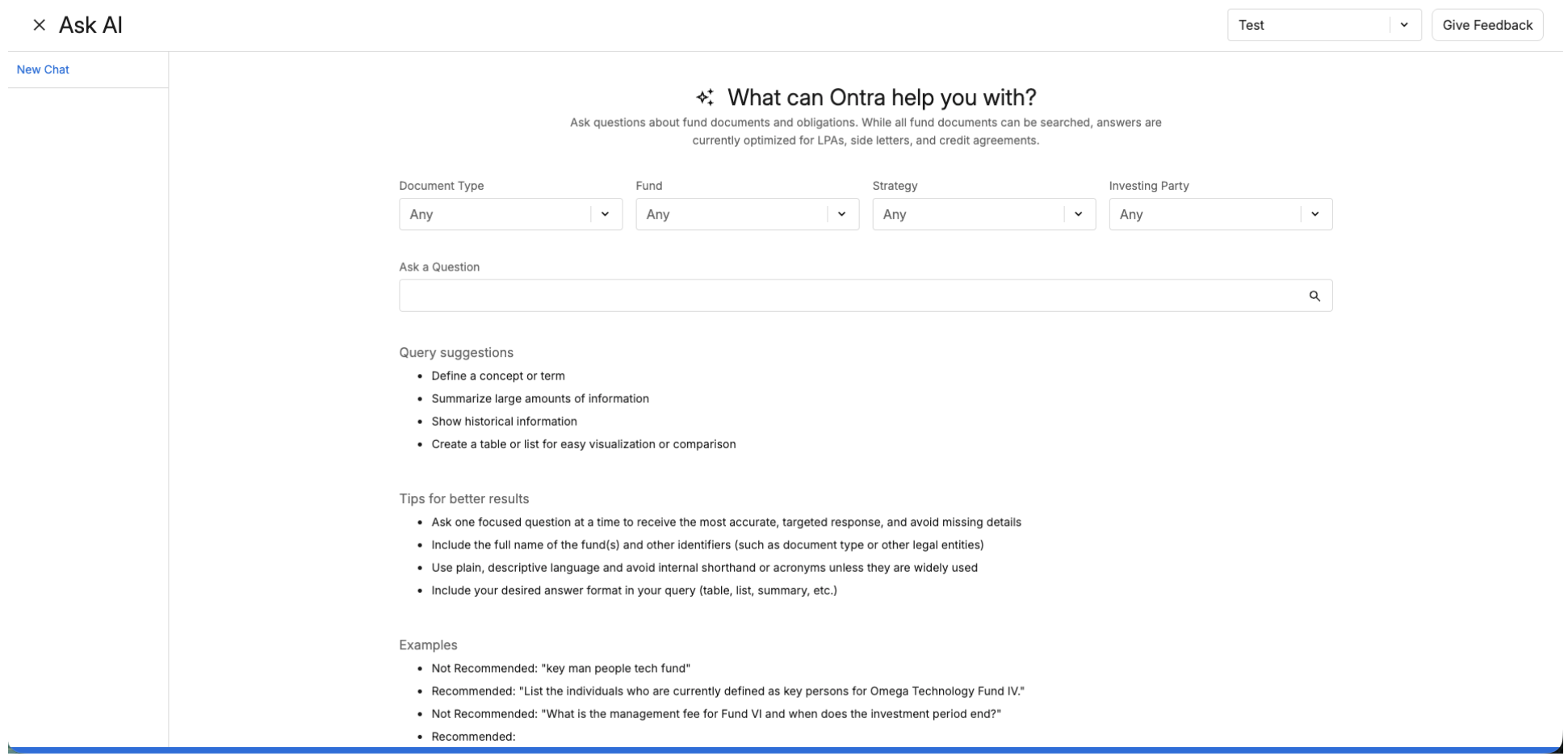
“Digging through records to find the historical entity details you need” is one of the pain points we hear about most, and it’s exactly what AI Search is built to eliminate. Query your entities or documents directly for instant answers to complex questions, instead of manually tracking down the information yourself.
It’s the same gap Jill Hyde described wanting closed at Beacon Capital Partners: “It would be great if they could also use an AI tool to search, to find how many entities we have in Texas, how many we have in California, what form of operating agreement we use for certain types of organizations,” she said. That’s effectively the query AI Search is built to answer: ask for a jurisdiction- or entity-type breakdown in plain language and get a direct answer, rather than manually filtering or exporting to a spreadsheet.
Entity & chart history: see how a structure got here
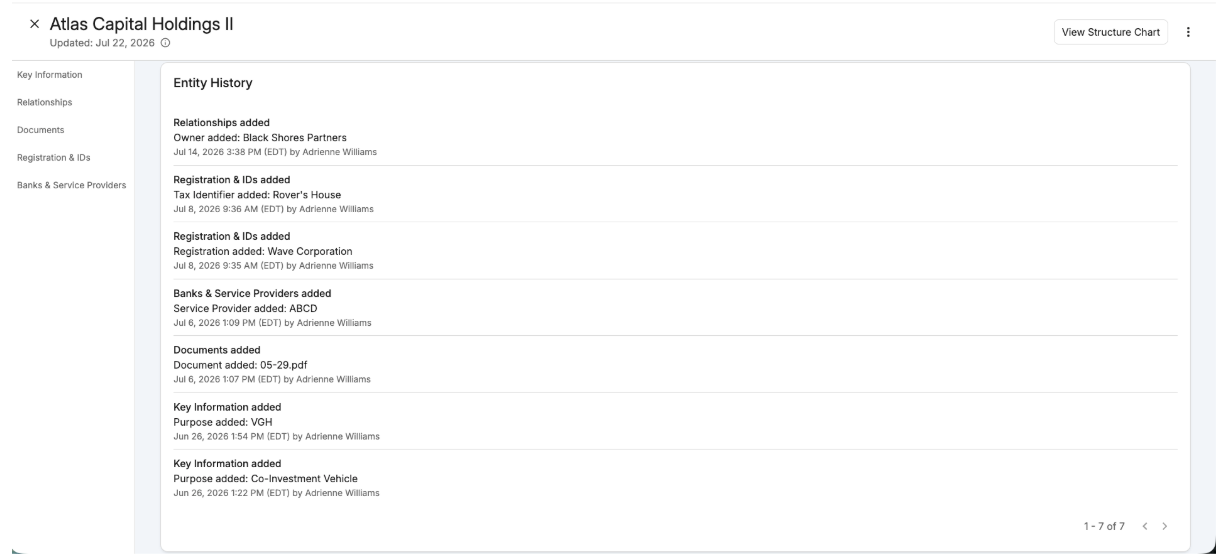
Track historical changes and ownership across entities and structure charts, so it’s easy to understand how a structure or a single entity within it has changed over time. That matters beyond mere curiosity: reconstructing past ownership or a prior chart state is often exactly what audit-readiness and compliance reviews require.
As Williams framed it on the webinar, that kind of visibility is what makes AI-assisted entity work defensible in the first place: “We need to be able to trace that a real person signed off, so it’s defensible to an auditor or a regulator.” Entity & chart history gives you that record automatically—who changed what, and when—without anyone having to reconstruct it by hand.
Less manual work, more built-in visibility
Taken together, these four updates target the same two problems from different angles: cutting out manual chart-building and research with AI, and giving you built-in visibility into how entities and structures have changed over time rather than reconstructing that history yourself.